Cognitive Diversity
in Clinical Practice
Understand different minds. Ask better questions.
When a patient's inner experience doesn't match the assumptions behind your questions, the history can be harder to access. Learn another route.
Starts Tuesday 12 January 20276.30pm UK time · Five weeks · Live online

Five weekly sessions
60-minute core · Discussion up to 90 minutes
Research, lived experience & clinical application
When a familiar question needs a different route.
A patient may know what happened without mentally seeing it. Someone describing a “silent mind” may mean no imagined sound, little inner commentary, or something else entirely.
Another person may know childhood facts without vividly reliving those experiences. “I can't remember” shouldn't automatically become “that never happened.”
The useful next step isn't to assign a label. It's to clarify the experience, find out what information's available and make the consultation accessible.
“Picture what happened.”
“Repeat it to yourself.”
“Think back to your childhood.”
Everyday prompts can assume access to an inner experience a patient may not have.
Leave with more than a list of terms.
- Recognise assumptions about visualisation, internal rehearsal and vivid recollection.
- Explain the relevant neuroscience, including the limits of what it tells us.
- Practise alternative questions and check understanding directly.
- Distinguish missing history from evidence that symptoms were absent.
- Explore records, concrete examples and appropriate collateral information.
- Apply professional curiosity through the C.A.R.E. course working aid.
Five weeks. A different clinical question each time.
Current research and neuroscience sit alongside lived experience, practical activities and discussion. We explore variation without turning cognitive profiles into new diagnoses.
-
Week 01
The spectrum of mental imagery
What do we assume when we ask someone to “picture” something?
Explore aphantasia, hypophantasia, typical imagery and hyperphantasia within a multisensory profile. Separate knowing from picturing and voluntary imagery from spontaneous experiences. Examine the neuroscience, then practise a question that doesn't depend on visualisation.
-
Week 02
The Mind's Ear and Inner Voice
What does a patient mean by a “silent mind”?
Explore auditory imagery and verbal thinking together, keeping anauralia and anendophasia distinct. Not hearing imagined sound doesn't necessarily mean you don't think in words. Consider the evidence and its uncertainties, then practise clarifying questions and alternatives to mental rehearsal.
-
Week 03
Autobiographical memory profiles
Are we asking what someone knows, what they relive, or how accurate the account is?
Explore SDAM, everyday memory variation and HSAM, without treating them as opposite ends of one validated scale. Separate personal facts, reliving, detail and accuracy. Work through a history-taking example while keeping lifelong differences distinct from new or progressive change.
-
Week 04
Neurodivergence and assessment barriers
How do we avoid mistaking unavailable history for absent symptoms?
Examine research associations with ADHD and autism without using cognitive profiles as diagnostic indicators. Practise describing incomplete developmental history, considering alternative evidence and documenting uncertainty. Adapt evidence gathering, not diagnostic criteria.
-
Week 05
C.A.R.E., professional curiosity and cases
What changes when we investigate before interpreting?
Bring the learning together through anonymised or provided cases using Clarify, Anchor, Respond, Escalate. Develop a practical change for your consultations while maintaining usual clinical assessment and safety routes. You'll use C.A.R.E. as a course working aid, not a validated diagnostic model.
Make time for a fuller understanding.
First session: Tuesday 12 January 2027
6.30pm UK time.
- 45 minutesTaught material connecting neuroscience, lived experience and clinical questions.
- 15 minutesA practical task and focused debrief.
- Up to 30 moreOptional discussion and questions.
You'll cover all essential learning in the 60-minute core. Allow approximately 10–15 minutes between sessions for a short reading or reflection task.
Included with your course
- Five live online sessions.
- A workbook with weekly practical tasks.
- A resource guide for further exploration.
- A C.A.R.E. prompt sheet and case worksheet.
- Provided scenarios, with personal sharing optional.
- Session recordings, available for up to 60 days after the fifth session.
- A certificate showing the hours you can record towards CPD.
£295 GBP
For the complete five-week programme.
Book your placeYou'll receive joining information and the full session dates by email after booking. If you pay personally and need a practice invoice for reimbursement, you can request one after checkout.
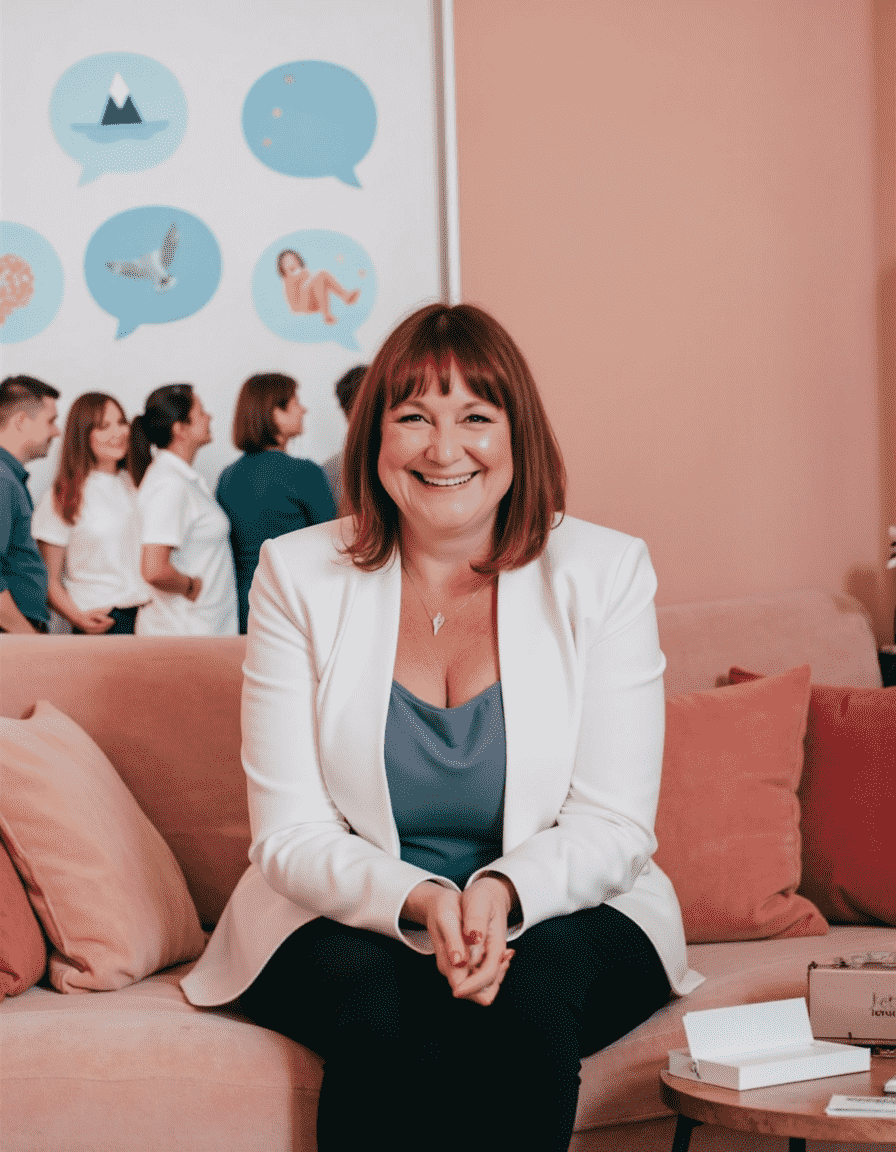
Meet Sassy Smith.
When she couldn't find a therapist who understood how her mind worked, she set out to build the training herself.
Sassy's the founder of Aphantasia Academy and author of Unseen Minds: A Therapist's Guide to Multisensory Aphantasia and Invisible Cognitive Differences.
She now trains therapists, counsellors, coaches, educators and organisations to recognise and adapt their practice for multisensory aphantasia, SDAM, anauralia, anendophasia and alexithymia—all of which she lives with herself.
She's been interviewed on BBC Radio and speaks at NHS conferences. This course brings her work into a GP-focused setting, with an emphasis on curiosity, clearer questions and accessible histories.
Bring the learning to your whole team.
Interested in training for a GP practice, primary care team or wider organisation?
We can deliver this same five-week training programme for your whole practice, with practice-level pricing rather than individual bookings. Get in touch to discuss your team and request a quote.
If you'd prefer a tailored session or programme, we can discuss that too. Tell us about your organisation, the intended audience and what you'd like the training to address.
Interested, but not ready to book?
Leave your details for updates about this course, future training events and the Aphantasia Academy newsletter. Stay informed while you decide whether the training is right for you.
You can unsubscribe at any time. Read our privacy policy.
By selecting Subscribe, you're asking to receive training news and our newsletter. You can unsubscribe at any time.
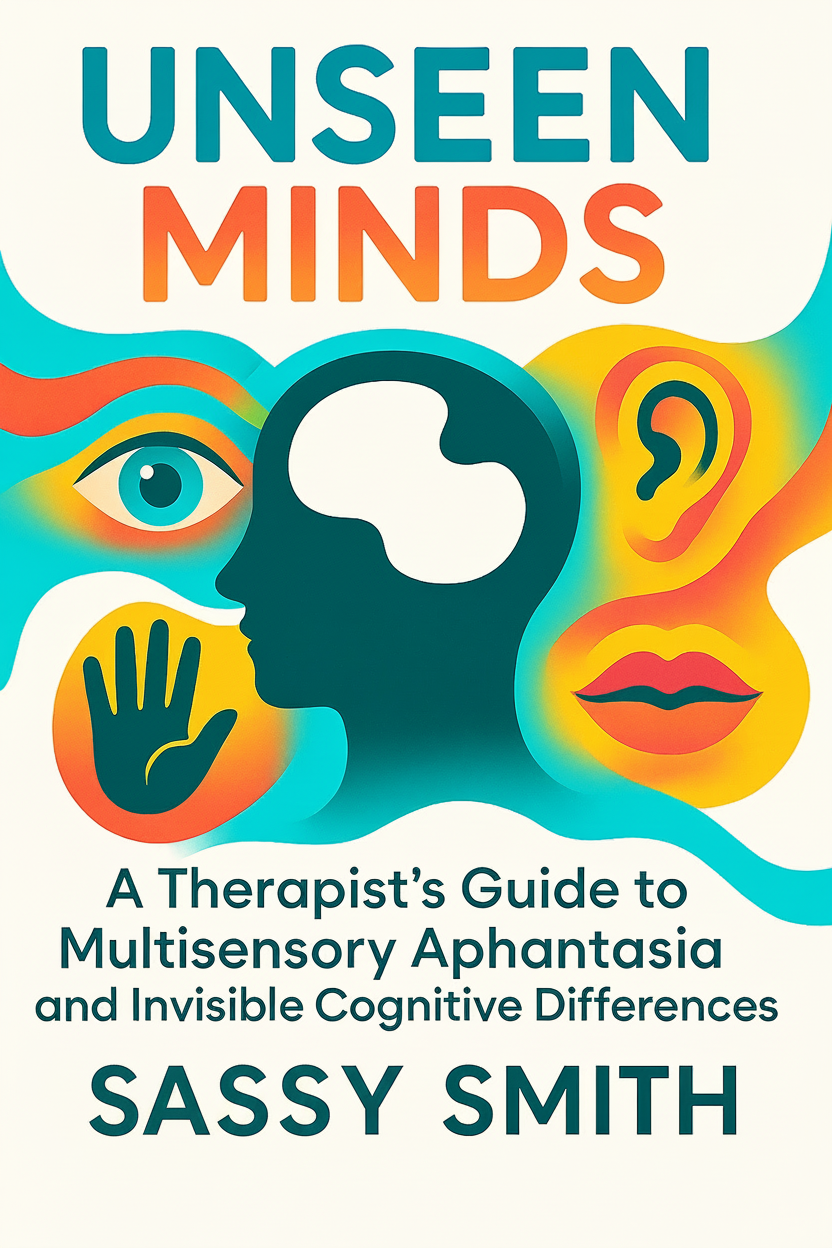
Prefer to start with the book?
Unseen Minds
A Therapist's Guide to Multisensory Aphantasia and Invisible Cognitive Differences
Written from lived experience and professional practice, Sassy's book explores what familiar approaches can miss when people picture, remember and think differently.
It's written for a therapy readership and offers another route into her work. It's supplementary reading, not a compulsory text for this GP course.
A few useful questions.
Is this therapy training?
No. It's a distinct course for GPs and other medical professionals, focused on clinical understanding, accessible histories, questioning and communication. It isn't the Academy's therapist training.
Will this qualify me to diagnose these profiles?
No. The course doesn't qualify participants to diagnose these cognitive profiles, deliver specialist neurodevelopmental assessments or treat imagery and memory differences. It supports clearer questioning and evidence gathering within your existing role.
Do I need previous training in aphantasia?
You don't need to have taken an Academy course. We'll introduce the profiles and the research before moving into practical clinical examples.
Must I share personal experiences or patient cases?
No. You can work from provided scenarios throughout. You don't have to share personal experiences. Any case contributed for discussion must be genuinely anonymised; you shouldn't submit patient records or identifying information.
Why is alexithymia mentioned in Sassy's bio but not in the programme?
Sassy's wider work and book cover five cognitive differences. This GP programme focuses on mental imagery, auditory imagery, inner speech and autobiographical memory. Alexithymia isn't a taught module.
Can I request a practice invoice if I pay myself?
Yes. After booking, you can request an invoice addressed to your practice to support a reimbursement claim. You'll need to provide the practice name and full address, plus the recipient's email address if it's different from your own.
What's your refund policy?
We offer a 14-day refund policy from the point of purchase.
Does this qualify for CPD?
Yes. You'll receive a certificate at the end of the training showing the hours you can record towards your CPD.
What happens if I can't attend a live session?
We'll record every session so you can catch up in your own time. Recordings are available for up to 60 days after the end of the fifth session.
A more accessible consultation starts with curiosity.
Explore the research, practise a different question and bring a clearer understanding to the patient in front of you.

Join Our Free Trial
Get started today before this once in a lifetime opportunity expires.