When the method is the problem, not the client.
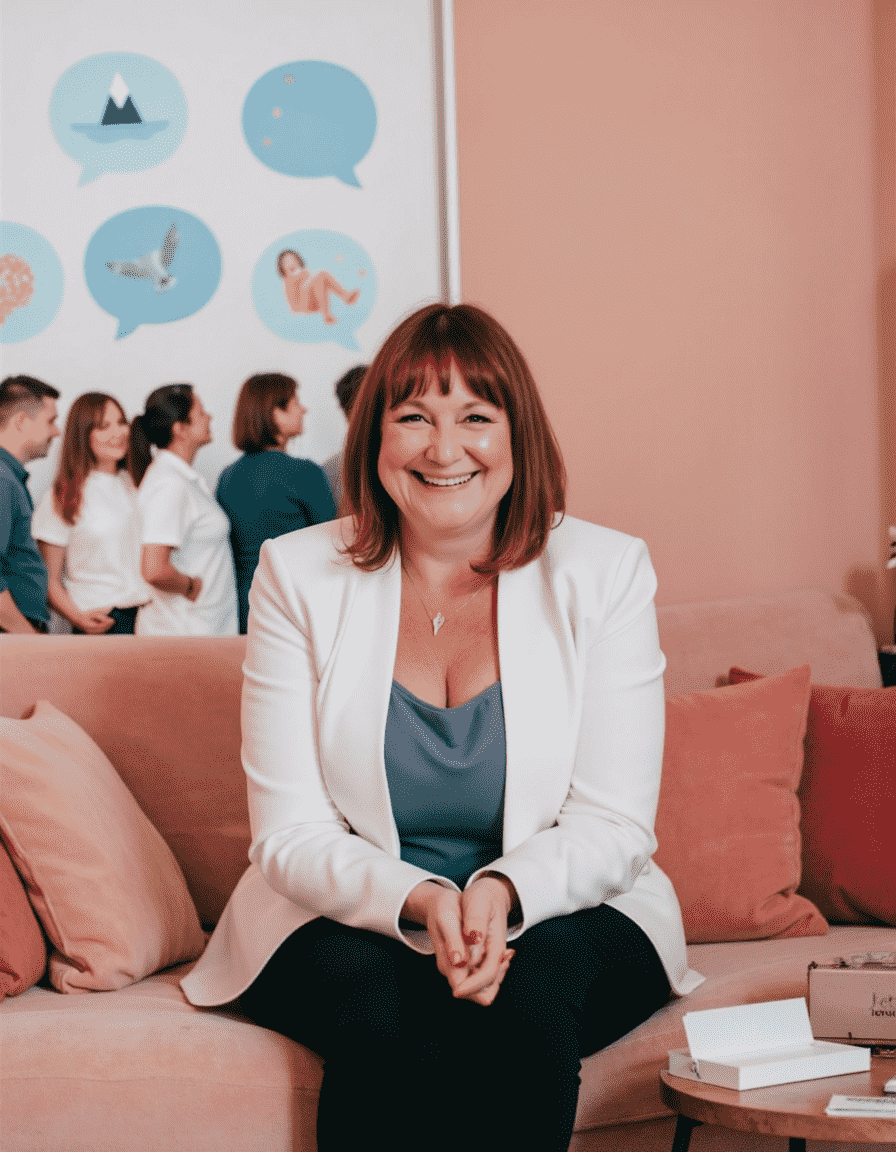
I'm Sassy Smith. I train therapists, counsellors, coaches and organisations to recognise five invisible cognitive differences and adapt the way they work. I do this from a lived experience perspective as I live with all five of them myself.
There's a particular kind of stuck that happens in therapy, where the client is engaged, the relationship is good, and the practitioner is skilled, and yet something isn't moving. The visualisation exercise that works so reliably for others simply produces nothing at all.
The practitioner looks for resistance, or avoidance, or an unresolved block, because that's what the training map points to. And the client, sensing that something is expected of them they can't produce, quietly begins to wonder whether they're the problem.
They are neurological realities rather than psychological blocks, and the standard therapeutic toolkit was never designed to accommodate them.
Absence doesn't show up on standard intake tools. Most clients have never had a name for what they're missing, because neither they nor their practitioner knew the right question to ask.
The five invisible cognitive differences
Each describes something absent rather than something present, which is precisely why they go unrecognised.
Multisensory aphantasia
No voluntary mental imagery, in any sense.
SDAM
They know what happened but can't relive it.
Anauralia
Silence inside. No replaying a voice or a tune.
Anendophasia
Wordless thinking, with no inner monologue.
Alexithymia
Emotion registers in the body but resists naming.
Aphantasia alone affects between 3.9 and 5% of people, and most practitioners have never been trained to recognise it.
It started with a word that didn't exist yet
In 2015 I read about the work of Adam Zeman, the neurologist who had just given a name to something I had been experiencing my whole life without ever having the words for it. The term was aphantasia, and it described me exactly.
That began a long voyage of discovery. Aphantasia was the first, and over the years that followed I found the others, SDAM, anauralia, anendophasia and alexithymia, recognising each one in turn and understanding how it shows up in my own life.
I took part in research. I immersed myself in the studies as they were published, and I had conversations with some of the researchers conducting that work, sharing my perspective and what I was noticing from the inside.
Living inside the cluster and following the research closely are two different kinds of knowledge. The training exists because I have both.
I know this from the inside.
I live inside the full cluster myself. I built Aphantasia Academy and the Unseen Minds Practitioner® certification because I know what it costs a person to sit in a room with a well-meaning professional who has no map for how they experience the world.
That means I can tell practitioners what it actually feels like to be on the receiving end of imagery-based techniques, and how to adapt without making a client feel broken.
The professional grounding
- Accredited qualifications in Leadership, Coaching, Women's Health, CBT, NLP, Hypnotherapy and Counselling
- Registered CPD provider with the CPD Certification Service
- Member of the Institute of Leadership
- Creator of the UK's first CPD-accredited training for therapists working with aphantasia and connected cognitive differences



Structured, not awareness content
CPD-accredited training built around named adaptation frameworks, so practitioners leave knowing what to do differently in the room, not only what to name.
The Recognise and Adapt Model
The clinical framework taught on the Unseen Minds Practitioner® Therapist Track. It covers how these differences present in the room, how to ask the right questions, and how to adapt established methods so the work can land.
The Notice, Choose, Fit Method
A distinct framework built for coaching practice, where the assumptions embedded in familiar models and prompts differ from those in therapy, and so do the adaptations.
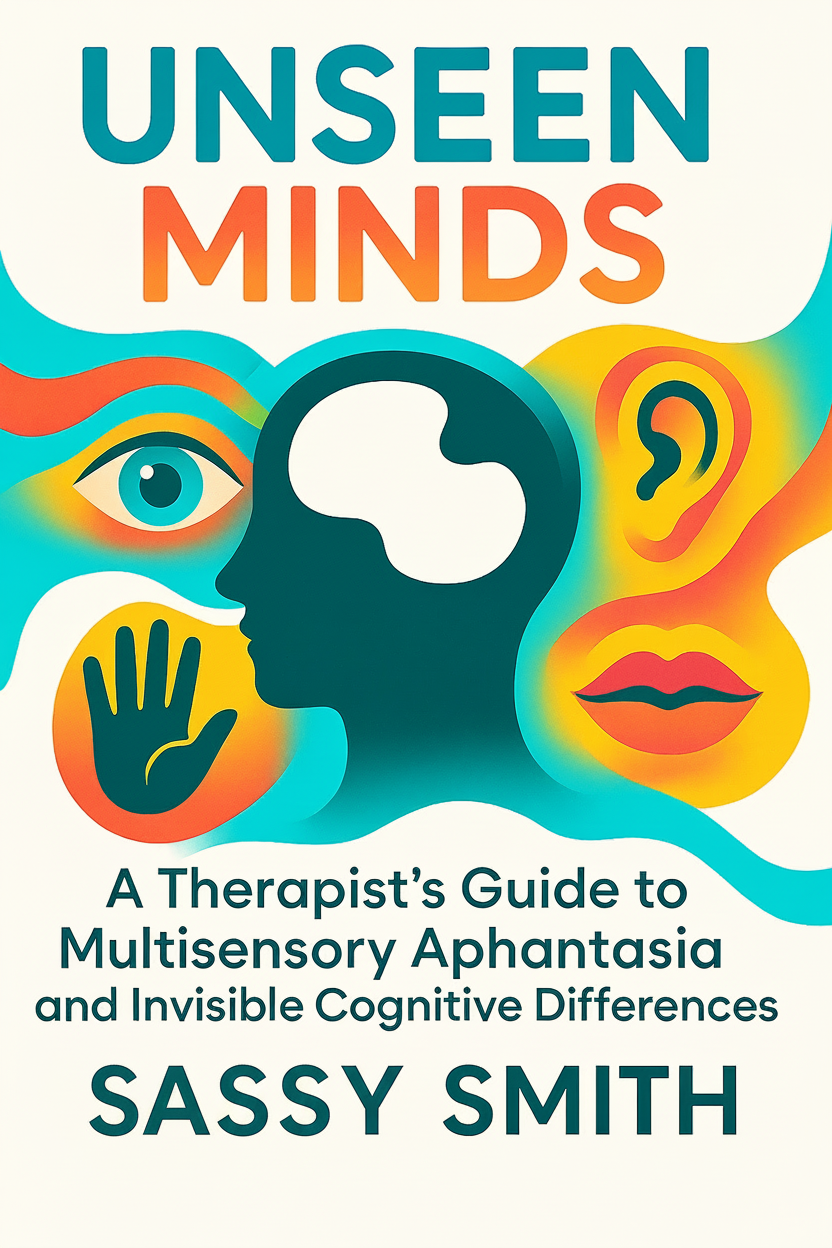
Unseen Minds
A Therapist's Guide to Multisensory Aphantasia and Invisible Cognitive Differences
The written form of this work, now in its second edition and available internationally. It sets out what standard approaches don't accommodate, and how to adapt for it.
Further editions for other professions are in progress.
Read the bookWhat people say
This course has been the most helpful professional development I've done all year, by a long shot!
It has made a difference to how I practice and enabled me to work effectively with clients who, without this knowledge, may have had less successful outcomes.
This has been so good. I really think it should be mandatory training for all therapists.
Featured in print, on radio and on podcasts
Sassy speaks and writes regularly on invisible cognitive differences in clinical, coaching and educational contexts, and is available for media commentary and keynote enquiries.
Where to start
Every profession meets these in its own way.
Therapists and counsellors
The Unseen Minds Practitioner® Therapist Track, with Aphantasia Foundations as a first step.
Therapist pathwayCoaches
Start with the introductory masterclass. The full Coach Track is in development.
Coach pathwayOrganisations
Keynotes, workshops and bespoke programmes for teams and services.
Organisational trainingIf you suspect the method is the issue rather than the client, I'd be glad to talk.
Whether that means training your team, certifying your own practice, or simply asking a question, the door is open.
