Your service is already working with these clients. Most teams can't see them.
We train talking therapies services, universities, wellbeing teams and public sector organisations to recognise five invisible cognitive differences and adapt the way they work.
CPD-accredited, practical, and built to be used the week after delivery.
The clients who don't progress, and nobody knows why
Every service has clients who don't progress in the way the model predicts. They turn up and engage, so the reason isn't obvious, and it rarely gets found.
When a client can't picture a safe place, can't hear an inner voice, can't relive a memory or can't name a feeling, standard approaches quietly stop working. Staff read it as resistance or poor motivation, because that's what their training points to. The client concludes they're beyond help.
These are neurological differences, not engagement problems. Once teams can recognise them, the adaptations cost nothing to apply.
people are affected by at least one of the five invisible cognitive differences.
- Around 200 people a year in a service supporting 2,000
- 3.9 to 5% have aphantasia, and cannot picture anything at all
- Rarely screened for, and almost never disclosed
Most clients will never raise it, because they assume everyone experiences their own mind the way they do. Practitioners rarely ask, because it isn't in the training.
A conservative cumulative estimate across multisensory aphantasia, SDAM, anauralia, anendophasia and alexithymia. These differences overlap, so people are counted once. Published prevalence data is stronger for some than others, and this figure is deliberately understated on that basis.
Not general neurodiversity awareness
Plenty of providers cover autism and ADHD. This training covers five specific differences that sit outside that conversation, are rarely screened for, and directly affect whether therapeutic and educational methods work at all.
Multisensory aphantasia
No voluntary mental imagery. Visualisation-based work produces nothing.
SDAM
Facts about the past without the ability to relive it. Memory-based work stalls.
Anauralia
No mental sound. Rehearsal and recall strategies fail silently.
Anendophasia
Wordless thinking. Self-talk and thought-record work has nothing to record.
Alexithymia
Emotion resists naming. Feelings-based enquiry stops before it starts.
Training is delivered by the author of Unseen Minds and creator of the Unseen Minds Practitioner® credential, drawing on current research and on lived experience of all five.
Teams we work with
Health and talking therapies
- NHS Talking Therapies services
- Mental health practitioners
- Behaviour change services
- Independent healthcare providers
Education
- University counselling services
- Student support and pastoral teams
- SENCOs and inclusion leads
- Schools and colleges
Workplace and public sector
- Workplace wellbeing teams
- EAP and occupational health providers
- HR and inclusion teams
- Local authority services
How training is delivered
Standalone or as part of a wider programme, online or in person, scoped around your service and capacity. Most services start with a live session and build from there.
Half-day and full-day workshops
Practical adaptations and immediate application, delivered live to your team online or on site. The usual starting point, and the format most services pilot with before committing further.
Custom webinars and masterclasses
Shorter, focused sessions designed around a specific staff group or a particular challenge your service is seeing. Suits large teams and rolling induction programmes.
Bespoke online training modules
Training built around your service and recorded as online modules your staff work through in their own time. It reaches the people who couldn't be there on the day, stays available for new starters, and covers each of the five differences in more depth than a single live session allows. Delivered as a structured programme rather than a library of videos, so teams finish it having actually changed something.
Consultancy and implementation
Ongoing support to embed cognitively inclusive practice into existing models, assessment processes and documentation, so it outlasts the training day.
What services say
Vital training for all practitioners. Enlightening and incredibly valuable, ensuring we're able to provide the best support possible.
If you want to improve your perspective on the world and give yourself the best chance of helping people, doing this training will help you achieve that. It was a very valued experience for us as a team.
Really engaging. Honestly one of the best seminars I've attended.
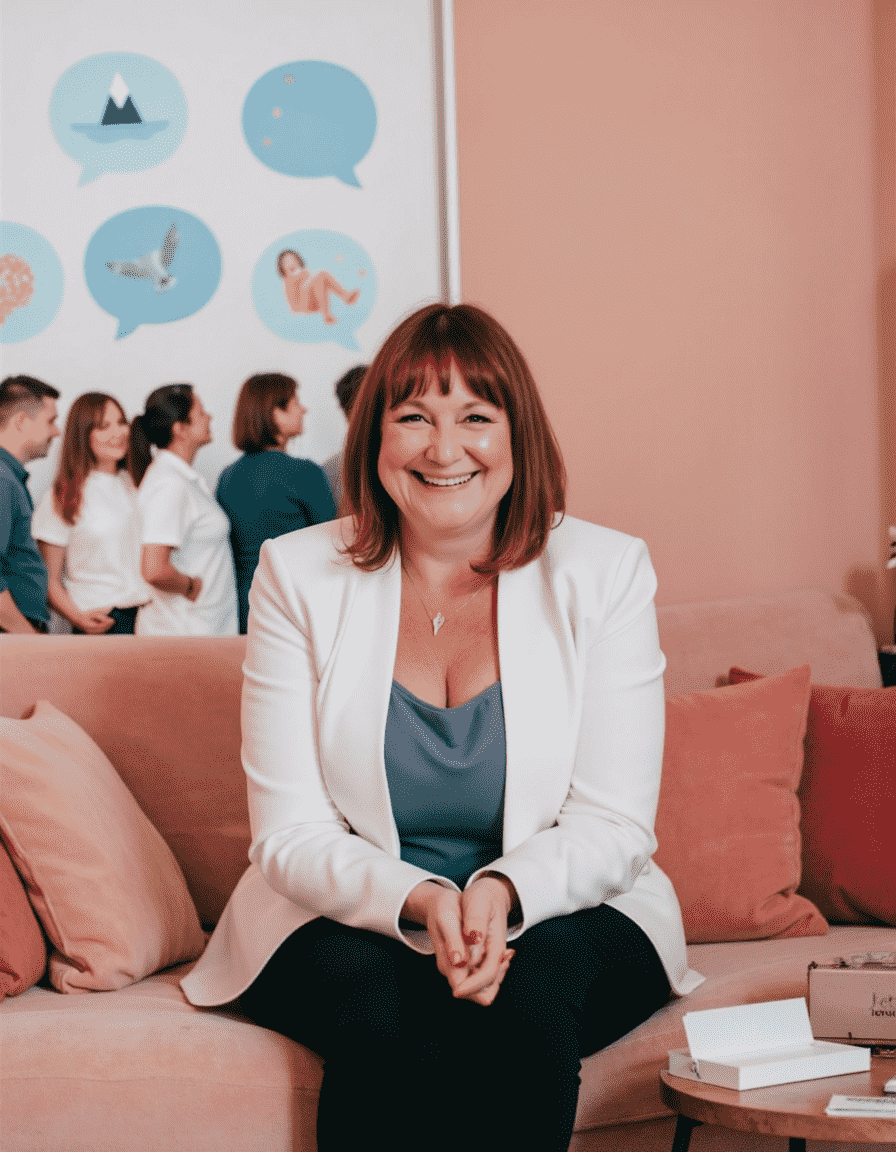
Sassy Smith
Founder of Aphantasia Academy, author of Unseen Minds: A Therapist's Guide to Multisensory Aphantasia and Invisible Cognitive Differences, and creator of the CPD-accredited Unseen Minds Practitioner® credential.
Sassy trains therapists, counsellors, coaches and organisations across the UK, US and Canada, and brings lived experience of all five differences to the work. Sessions are practical rather than theoretical: teams leave with adaptations they can use in their next appointment.
Straightforward to commission
Get in touch
Tell us about your service, your team size and what you're seeing. No form-filling marathon.
Scoping call
Thirty minutes to understand your context and whether this is the right fit. No obligation.
Proposal and quote
A written proposal with format, content, dates and costs, suitable for internal sign-off.
Delivery
Training delivered to your team, with follow-up materials and an option to embed further.
Find out what this would look like for your team.
Tell us about your service and we'll come back with options, formats and costs. If it isn't the right fit, we'll say so.
Bespoke pricing depends on format, team size and delivery mode.
