What if the client you're struggling to reach isn't resistant, but cognitively different?
The clients who go quiet, who stop engaging, who drop out and leave you wondering why. Some of them were never resistant. Their minds may simply process thoughts, feelings and their inner worlds differently, and your training may never have shown you how to spot it.
Start your training, £249The clients who leave, and you never know why
These are the moments that send experienced therapists looking for CPD that goes deeper than a tick-box module. If any of them resonate, you're not alone, and it isn't a failure of skill.
I had a client who just stopped coming. They seemed engaged, but something wasn't clicking. I still wonder what I missed.
When I ask clients to visualise a safe place, some of them look at me blankly. I assumed they were dissociating, but now I'm not sure.
I'm doing CPD, but it all feels so generic. I want to go deeper and actually feel more skilled, not just tick a box.
There's no one to ask. When I hit a wall with a client, I'm completely on my own trying to figure it out.
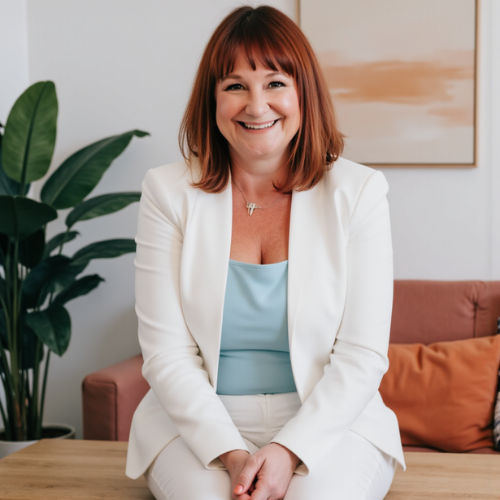
I was that invisible client.
I cannot form mental images. When I sought help for a crushing depression, I sat in rooms with skilled, caring therapists who had no idea that the tools they were using could not work for a mind like mine.
I was told I was resistant. I was told I was dissociating. I left feeling more broken than when I arrived.
This course is the training I wish every one of my therapists had taken.
I live with all five invisible cognitive differences: multisensory aphantasia, SDAM, anauralia, anendophasia and alexithymia. Around 1 in 20 people cannot form mental images at all, and across the whole of the UK, ten therapists currently list aphantasia as a specialism on Counselling Directory. Seven of them trained with the Academy.
Five practical modules
Designed to be usable in your next session. Every lesson connects directly to your work with real clients.
The first fifteen minutes: how to spot the invisible client
The key phrases that signal a non-visual mind, and how to raise the subject without creating shame. Includes a downloadable aphantasia-informed intake questionnaire you can put into your practice immediately.
Downloadable intake formThe core adaptations: modifying your existing toolkit
The Verbal-Somatic Framework for adapting CBT, non-visual grounding techniques for anxiety, and a step-by-step guide to non-visual EMDR resourcing. These are the practical tools your training never gave you.
Technique reference cardsThe tip of the iceberg: an introduction to the full spectrum
Aphantasia rarely travels alone. An accessible overview of SDAM, anauralia, anendophasia and alexithymia, and the signals that tell you when a client needs more specialist support than this course covers.
Awareness level, full adaptations in the certificationCase study workshop: from first contact to breakthrough
A detailed, narrated case study following an aphantasic client from first contact through to a meaningful breakthrough, showing exactly how the adaptations from modules one to three are applied in practice.
Annotated session notes and client worksheetsDescribing this work in your profile
How to describe your new competence accurately and ethically, update your Counselling Directory profile, and be findable by the clients who have been searching for someone exactly like you.
Profile templateBuilt for the room, not the reading list
Session-ready from module one
Every module is built around application. You'll finish module one with an intake questionnaire you can use in your very next session.
Taught from the inside
Created by a specialist who lives with all five differences, so the adaptations come from knowing what it feels like when the standard version doesn't work.
You've read the book, now use it
If you've read Unseen Minds, this is the natural continuation, moving from understanding to implementation with the clinical tools to match.
Aphantasia Foundations
One complete course, practical tools you can use from day one, and the foundation you need to work confidently with the clients standard training overlooks.
- Five practical, self-paced modules
- Downloadable aphantasia-informed intake questionnaire
- Technique reference cards for CBT and EMDR adaptations
- Full case study workshop with session plans
- Profile and practice module
- Certificate of completion, counting towards your CPD
- Lifetime access to all materials and updates
Upgrade later and what you paid here comes off the certification price.
Frequently asked
Who is this course for?
Qualified counsellors, psychotherapists and practitioners in private practice or employed settings who want to expand their competence. It suits all experience levels, provided you already have a modality to adapt.
Does this count towards my CPD?
Yes. Aphantasia Academy is a registered CPD provider with the CPD Certification Service, so the hours you spend on Foundations count towards your CPD record, and you'll receive a certificate of completion. Course-level accreditation, where the CPD Certification Service assesses and approves the course itself, applies to the Unseen Minds Practitioner® Training.
What's the difference between this and the full certification?
Aphantasia Foundations focuses on aphantasia and gives an awareness-level introduction to the other four differences. The Unseen Minds Practitioner® Training provides full clinical adaptations across all five, with advanced protocols, a live integration session and formal CPD accreditation. Many people complete Foundations first and then upgrade.
If I upgrade later, will I pay twice?
No. What you paid for Foundations is deducted from the certification price.
I've already read Unseen Minds. Is this still worth doing?
Yes. The book gives you the understanding, and this course gives you the tools. It takes you from knowing what aphantasia is to knowing exactly what to do in your next session with an aphantasic client.
How long will it take?
The course is self-paced, and most people complete it within two to four weeks alongside their existing practice. You have lifetime access, so you can revisit any module at any time.
The clients who need this are already in your caseload.
They're in your waiting room. They're searching for a therapist who understands them. This is where that starts.
Enrol now, £249