When Coaching Models Don't Fit Every Mind
"The goal isn't to change the client's mind. It's to change how we meet it."
A practical masterclass for coaches who want to understand invisible cognitive differences, adapt their methods ethically, and offer more inclusive support to every client they work with.
Watch the masterclass — £11.99Instant access · watch at your own pace · for coaches, practitioners and wellbeing professionals
The coaching tools we rely on aren't always neutral
Many coaching models assume clients can visualise goals, hear an inner voice, reflect on past experiences, identify emotions clearly, or access memories in a particular way. Not every mind works like that.
These prompts sit inside goal-setting, reflective practice, emotional intelligence work, values exploration and confidence work, and they all rely on something we rarely stop to question: that the client can access imagery, inner dialogue, autobiographical memory or emotional identification in the way the method expects.
For some clients, they can't. That doesn't make them resistant, unmotivated, or beyond coaching. It may simply mean the method and the mind are mismatched.
- Visualise your future.
- Listen to your inner voice.
- Think back to a time you succeeded.
- Notice what you feel.
Each one assumes a capacity the client may not have, and neither of you may realise it is missing.
The misattunement trap
Where a coach interprets hesitation as avoidance or resistance, when the real issue is a mismatch between a technique and the client's cognitive style.
This masterclass is for you if you're a coach who
Cares about ethical and inclusive practice.
Wants to understand cognitive differences that may be invisible in the coaching room.
Uses visualisation, reflective questioning, emotional awareness, values work, future-self exercises or past-success prompts.
Wants to recognise when a technique may not fit the client in front of you.
Is committed to adapting your practice without abandoning the models you already use.
Wants to create coaching spaces where more clients can access the work.
Nobody is asking you to throw your training in the bin, dramatic little bonfire and all. The aim is to become more precise, more attuned, and more able to notice when a standard tool needs translating.
What you'll learn
The hidden assumptions inside common coaching tools
How many approaches assume clients can visualise, hear an inner voice, vividly recall past experiences and identify emotions with ease, and how this links to models like GROW, solution-focused coaching and emotional intelligence frameworks.
An introduction to invisible cognitive differences
The basics of aphantasia, anendophasia, SDAM and alexithymia, including how each can show up in coaching conversations.
Why resistance may not be resistance
How a client's response can be misunderstood when a coach assumes their inner world works in the same way as their own.
Practical adaptations for your coaching practice
How to shift from visualising to describing, from inner dialogue to external processing, from reliving memories to using present evidence, and from emotion identification to more accessible routes into awareness.
A simple framework for inclusive coaching
The Notice, Choose, Fit method: notice your assumptions, choose an appropriate method, and fit the technique to the client rather than expecting the client to fit the technique.
By the end of the masterclass, you'll have
A clearer understanding of invisible cognitive differences and how they affect coaching.
More awareness of the assumptions built into common coaching tools.
Language for recognising possible misattunement.
Practical adaptations you can begin using in your work.
A more inclusive lens for supervision, reflection and client conversations.
A simple way to think about fitting the method to the mind in front of you.
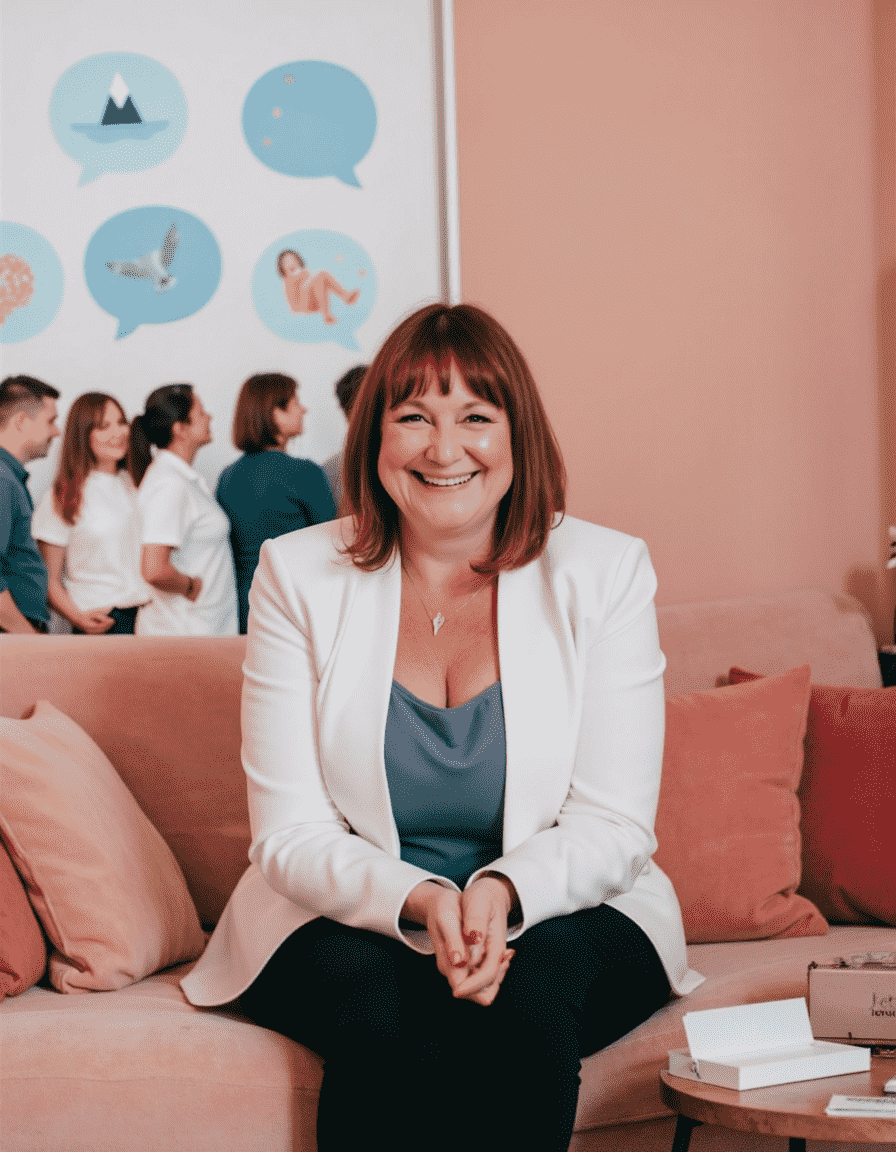
Sassy Smith
Founder, Aphantasia Academy Ltd · EMCC UK Member
Sassy provides specialist training for coaches, therapists, counsellors, educators and wellbeing professionals, and is the author of Unseen Minds.
She brings over 30 years' experience across the public and private sectors, is a qualified coach and member of EMCC UK, and brings both professional and lived experience to this work as someone with multisensory aphantasia, SDAM, anauralia, anendophasia and alexithymia.
More about SassyA few things coaches often ask
Is this only for coaches who work with neurodivergent clients?
No. This is for any coach who wants to understand how invisible cognitive differences may shape a client's experience, whether or not the client has a diagnosis or language for it.
Do I need specialist therapeutic training to attend?
No. This masterclass is designed to build awareness and practical understanding for coaches and practitioners. No prior knowledge is needed, and you'll be guided through the key concepts clearly and practically, with examples that connect directly to coaching practice.
Will this replace the coaching models I already use?
No. The aim is to help you notice where a model may assume imagery, inner speech, emotional identification or autobiographical recall, then adapt your approach where needed. You aren't being asked to abandon anything, you're being invited to use it more precisely.
Make your coaching more inclusive
If you're committed to ethical, thoughtful, client-centred practice, this masterclass will help you see the parts of coaching that often go unquestioned, so you can use what you already know more precisely.
Watch the masterclass — £11.99Instant access · £11.99 · an introductory masterclass, with no prior knowledge required.