This is not resistance.
Recognising and adapting when a client can't visualise, hear an inner voice, or relive the past.
Two live sessions with Sassy Smith, taught around one client, yours or a composite case provided, and one of your own tools. You leave with an adapted exercise you can use in your next session, and the questions that tell you when you need it.
You've had this client
Engaged, motivated, doing the work. Then a technique you trust lands flat, and the usual explanations arrive: avoidance, ambivalence, not ready. Sometimes those are right. Sometimes something else is going on.
You ask them to picture somewhere calm. They go quiet, or describe it in facts rather than images, or tell you they're trying. In current large studies, around 4% of adults have visual aphantasia on the VVIQ.
You ask for a specific time it happened. What comes back is a summary, not a scene. It can read as guardedness. It can also be a mind that stores the past as knowledge rather than as something to relive.
Catch the thought, write it down. Week after week, nothing. Before it's non-compliance, ask what happens in their head when they try. Some people have no inner voice to catch.
"Fine." "Numb." "I don't know." You've heard it as a defence. For some clients, identifying what they feel is the hard part, and the body often knows before the words do.
The question that changes the work: swap "why won't they do it" for "what might be stopping them." This course gives you a structured way to ask it, and a method for what to do with the answer.
Four things you can use on Wednesday morning
Three questions you can ask in session
Plain-language questions that surface whether a client can visualise, hear an inner voice, relive a memory or identify what they feel. No labels, no screening tools, no diagnosis.
A barrier map for one real client
One page, five areas. You map a client you're already working with, mark what's known, suspected and untested, and see the case differently before the session ends.
An honest audit of your own tools
Which of your core techniques quietly rely on picturing, hearing, reliving or feeling. Most practitioners find at least two they had never thought of that way.
One adapted exercise, written down
Your technique, rebuilt for your client using the Recognise and Adapt Model, with the words you'll use to explain the change and a way to check it worked.
Recognise, then adapt
Tuesday 1 and Tuesday 8 December, 7pm to 9pm UK time (2pm to 4pm Eastern). Teaching takes less than half of each session. The rest is your case and your tools.
Recognise
A ten-minute recap of the five differences, then the part the free masterclass doesn't cover: what each one looks like in the room, and how easily it reads as resistance, avoidance, dissociation or low insight.
- The in-session signals for each of the five, and what they're usually mistaken for
- The three questions, and the ones not to ask
- What to say when a client has a strong reaction to learning their mind works differently
- Client barrier mapping on a client you bring
Adapt
The Recognise and Adapt Model in four steps, an adaptation menu across all five areas, a live demonstration on one attendee's real technique, and then your own: one tool, rebuilt for one client, with a plan to review it.
- Keep the therapeutic function, change the route: the principle behind every adaptation
- Micro-adaptations for imagery work, thought records, memory-based work, emotion identification and goal setting
- Sassy works one attendee's case through the model aloud
- You adapt one of your own exercises and write down how you'll know it worked
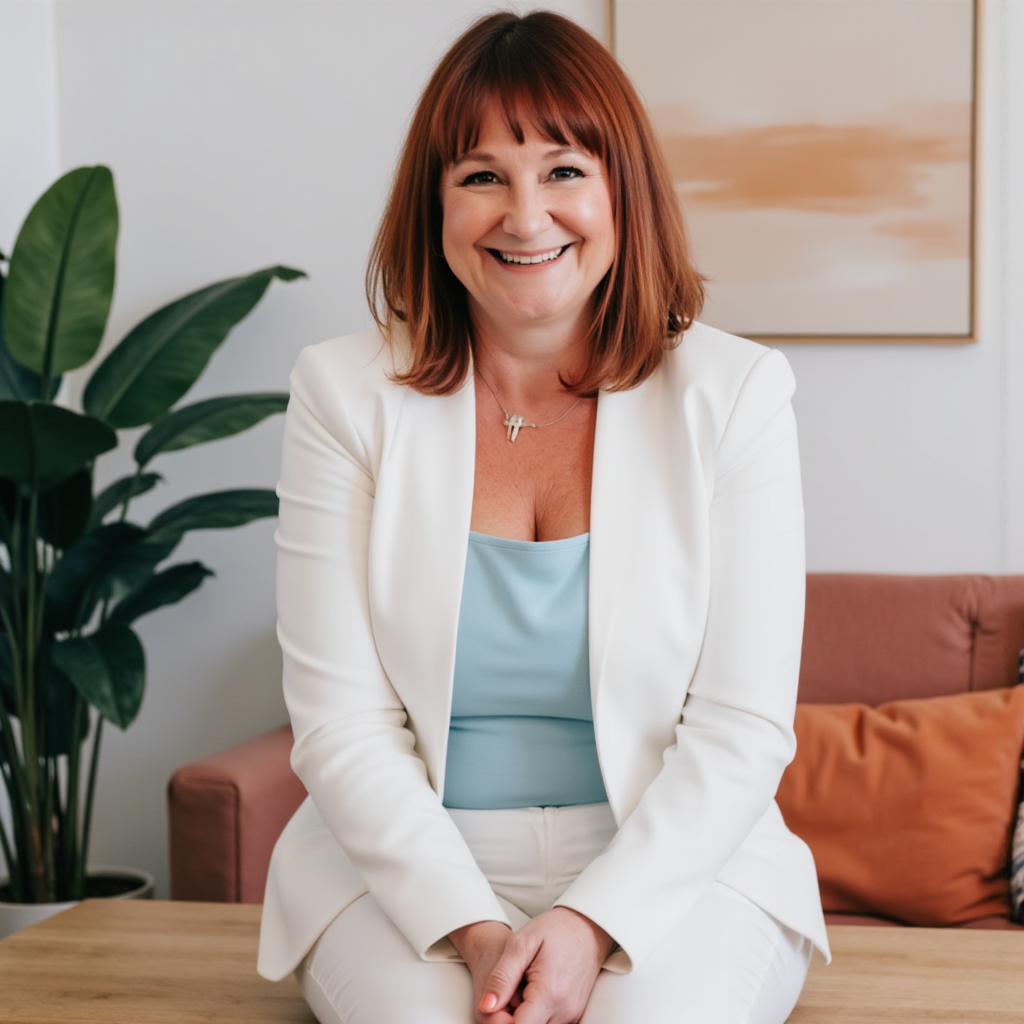
Sassy Smith
I cannot form mental images. I have no inner voice, no soundtrack in my head, and no way of reliving my own past. When I sought help for depression, I sat with skilled, caring therapists who had no idea their tools couldn't work for a mind like mine. I was told I was resistant.
I built the training I needed my therapists to have taken.
Aphantasia Academy is the first and leading UK provider of training in multisensory aphantasia and connected invisible cognitive differences. As of August 2026, seven of the ten therapists listing aphantasia as a specialism on Counselling Directory trained with the Academy.
What changes in the room
It has made a difference to how I practice and enabled me to work effectively with clients who, without this knowledge, may have had less successful outcomes. Clients who have tried therapy before without progress can see meaningful results.
I'd strongly recommend it. It uncovers a deeper layer of understanding our clients and just the world around us, and it's thought provoking in that it makes you reflect on your interactions and sessions.
It was helpful to have the knowledge available to adapt my approach to work with the client, not against them.
If you don't know why you might need to do this training, then you really need to do it.
Quotes are from practitioners who completed Unseen Minds Practitioner® Training or organisational training with Aphantasia Academy. This course is the first live run; its own feedback will appear here after 8 December.
This Is Not Resistance
Two live sessions, capped at 25 so there's room to work on your own case. If a date doesn't work, you move to the next run at no cost.
- Two live two-hour online sessions, 1 and 8 December, 7pm UK
- Six worksheets, including the client barrier map and the Recognise and Adapt worksheet
- Recordings of both sessions, available for 14 days after 8 December
- Certificate of attendance for 4 hours of CPD
- Pre-work pack and a between-session task that takes ten minutes
- Full fee credited against a Therapist Track founding cohort place
Full refund up to 48 hours before session one. After that, transfer to the next run.
Who this is for
Book if you are
- A qualified therapist or counsellor, or a trainee on placement, in any modality
- Bringing one anonymised client you've wondered about, or working with the composite case provided in the pre-work
- Able to attend both live sessions, or happy to work from the recordings
- Looking for something you can apply the same week, not a reading list
Look elsewhere if you want
- A self-paced course with no live element: Aphantasia Foundations is the better fit
- The full credential, assessment and the frameworks in depth: that's the Therapist Track
- Training for coaches: the Notice, Choose, Fit approach lives in the coaching masterclass
- A free introduction to the five differences: start with the CBT masterclass
Before you book
What if I can't make one of the dates?
Both sessions are recorded and the recordings stay available for 14 days after 8 December. If you'd rather attend live, you can move your place to the next run at no cost. The course runs monthly while there's demand.
Does it count towards my CPD?
Yes. You receive a certificate of attendance for 4 hours of CPD, issued by Aphantasia Academy, a CPD Member organisation of The CPD Certification Service. The course itself is not individually CPD certified; that applies to the Unseen Minds Practitioner® Training.
I'm in the US or Canada. Is this approved CE?
No. The certificate states the hours and the provider, and the sessions run at 2pm Eastern, but it is not NBCC or state-board approved continuing education. Check with your board whether it can be logged as professional development.
Do I need to have watched the free masterclass?
Yes, and it's part of the pre-work. It takes about 25 minutes and covers what the five differences are, so session one can spend its time on what they look like in the room rather than on definitions.
What do I need to bring?
Ideally one client, fully anonymised, where you've wondered whether something cognitive is in the way; three sentences about what happens in the room is enough. If nobody comes to mind, the pre-work pack includes a composite case drawn from Sassy's own experience as a client, and you work with that instead. You'll also complete a one-page audit of the techniques you use most. Everything is sent to you on booking.
Is this the same as the Therapist Track?
No. This is four hours on recognition and adaptation applied to your own practice. The Therapist Track is the full programme across all five differences, with written modules, assessment, a live cohort and the Unseen Minds Practitioner® credential. If you go on to book the founding cohort, what you paid here comes off the price.
What's the refund policy?
Full refund up to 48 hours before session one. After that, no refund, but you can transfer your place to the next run.
The client you're thinking of is still on your caseload.
Bring them. Four hours, one adapted exercise, and a different question to ask the next time a method doesn't fit.
Book your place, £79 early bird